- 01/08/2025
- Dr. Srivatsan Gurumurthy
- 0 Comments
- Blog
Common Mistakes That Lead to Recurrent Hernias
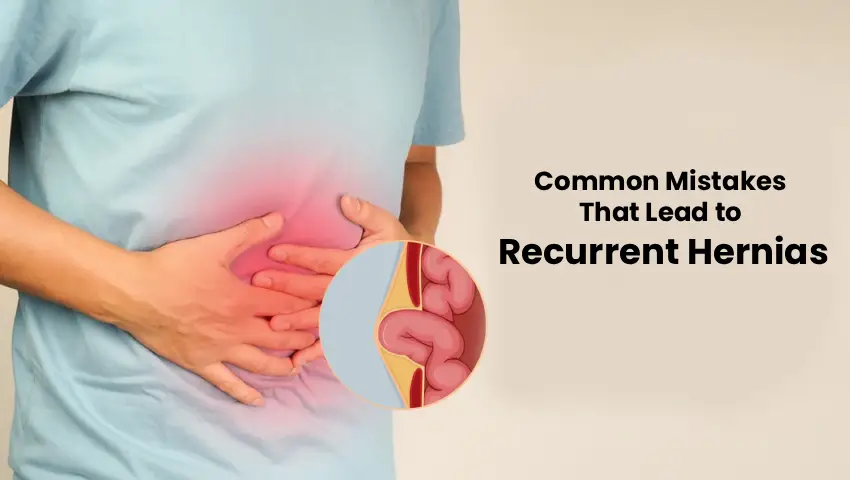
A hernia can happen when a part of the internal tissue or organ pushes through a weak spot in the muscle wall. Many people believe that once it is repaired through surgery, the problem is solved permanently. But sadly, this is not always true. Recurrent hernias are a common concern — where the hernia returns after previous surgical repair. As a senior hernia surgeon in Chennai with over 17 years of experience, I have treated many patients who returned with a second or third hernia. The good news is — in most cases, recurrent hernias can be prevented by avoiding some common mistakes.
Top Mistakes That Lead to Recurrent Hernias:
Ignoring Post-Surgery Instructions:
- One of the major causes of hernia recurrence is not following the post-operative care advised by your doctor. After hernia surgery, your body needs time to heal. Lifting heavy weights, doing strenuous work, or not wearing the abdominal binder can increase the pressure on the operated area.
- Tip: Follow your surgeon’s instructions carefully for the first 6–8 weeks after surgery. Avoid lifting anything heavy and take complete rest during the recovery period.
Smoking and Poor Lifestyle Habits:
- Smoking is known to weaken muscle tissues and delay healing. It also leads to chronic coughing, which puts repeated pressure on the abdominal wall — this increases the chances of a recurrent hernia.
- Tip: Stop smoking before and after hernia surgery. Eat a balanced diet, stay hydrated, and avoid alcohol during the recovery period.
Choosing the Wrong Surgeon:
- Hernia repair may look simple, but it requires precision and skill — especially when it involves large or complicated hernias. A poorly done surgery or wrong technique can result in the hernia coming back.
- Dr. S. Srivatsan Gurumurthy is a robotic and laparoscopic hernia surgeon in Chennai, specially trained in treating complex and recurrent hernias with advanced techniques like robotic-assisted mesh repair. Choosing an experienced specialist increases your chances of a full and lasting recovery.
Poor Surgical Technique or Mesh Placement:
- Improper placement of mesh, low-quality materials, or tension-based suturing methods during the surgery can weaken the repair and lead to hernia recurrence. Modern surgery now prefers tension-free mesh repair using laparoscopic or robotic methods to minimize this risk.
- Tip: Ask your doctor about the technique and material being used in your hernia repair. Advanced laparoscopic and robotic methods have shown better long-term results.
Obesity and Weak Abdominal Muscles:
- Being overweight increases the pressure on your abdominal wall, which can push the hernia to return — especially if the abdominal muscles are not strong enough to support the repair.
- Tip: After recovery, focus on healthy weight management. Include light abdominal exercises (as advised by your doctor) to strengthen your core muscles.
Ignoring Chronic Cough, Constipation, or Urinary Strain:
- Continuous straining due to chronic cough, constipation, or difficulty in urination increases intra-abdominal pressure. This constant pressure can stress the surgical site and lead to hernia recurrence.
- Tip: Treat underlying conditions like asthma, bronchitis, or constipation before and after your hernia surgery. Do not ignore any symptom that puts pressure on your abdomen.
Resuming Physical Activity Too Early:
- Some patients feel better within a week or two after surgery and rush back to work or start exercising too soon. This is a dangerous mistake and often results in the repair giving way under stress.
- Tip: Give your body the rest it needs. Resume work or gym only after your doctor gives you clearance. Rushing recovery will only delay healing and increase risk.
Other Risk Factors That May Contribute:
Some other less-known but important causes of hernia recurrence include:
- Multiple surgeries at the same site – weakens tissue
- Connective tissue disorders – such as Ehlers-Danlos syndrome
- Vitamin C or protein deficiency – slows down tissue healing
- Old age – natural muscle weakness
If you have any of these risk factors, inform your doctor before surgery.
How Robotic Surgery Reduces Recurrence:
Robotic-assisted hernia surgery offers a major advantage in preventing recurrence:
- Better precision and control
- Less trauma to surrounding tissues
- Ideal mesh placement with secure fixation
- Lower infection rates
Dr. Srivatsan Gurumurthy uses the Da Vinci robotic system to perform advanced hernia surgeries with better long-term results.
Importance of Choosing an Experienced Surgeon:
Experience matters. A skilled surgeon knows how to handle complex hernias, choose the right technique, and advise you properly post-surgery. Dr. S. Srivatsan Gurumurthy is a leading hernia surgeon in Chennai with over 17 years of experience. He has handled many recurrent hernia cases and offers robotic, laparoscopic, and open techniques based on your individual need.
Dr. Srivatsan Gurumurthy's Expertise in Robotic Hernia Surgery:
- Expert in Advanced GI and Hernia Surgeries: Dr. Srivatsan Gurumurthy has 17+ years of experience in advanced gastrointestinal and hernia surgeries, using minimally invasive and robotic techniques for safer outcomes and faster recovery.
- Fellowship-Trained in Minimal Access and GI Surgery: He is fellowship-trained in Minimal Access Surgery and GI Surgery, ensuring high expertise in laparoscopic and robotic procedures for complex abdominal and hernia conditions.
- Specialist in Complex and Recurrent Hernia Repairs: Dr. Srivatsan is highly skilled in managing large, recurrent, or complicated hernias, offering specialized mesh repair techniques and robotic surgery for long-term results.
- Practicing at GEM Hospital, Perungudi, Chennai: He practices at GEM Hospital, a renowned center for laparoscopic and robotic surgery in Chennai, equipped with advanced technology like the Da Vinci robotic system.
- Trusted by Hundreds of Patients: With a reputation for precision and personalized care, he is trusted by hundreds of patients for successful hernia treatments with minimal recurrence and smooth recovery.
- Treatment for All Types of Hernias: He treats a wide range of hernias including umbilical, inguinal, epigastric, incisional, femoral, and complex recurrent hernias using modern, minimally invasive methods.
- Advanced Robotic Surgery for Better Healing: Using robotic-assisted surgery, he ensures minimal pain, less scarring, and quicker recovery. Robotic precision improves outcomes, especially in difficult and repeat hernia cases.
When Should You Consult a Doctor Again?
If you notice any of the following after hernia surgery, consult your surgeon immediately:
- Swelling or bulge in the same area
- Pain that increases with movement
- Redness or pus around the surgical wound
- Unexplained fever or fatigue
Early treatment prevents complications and gives better outcomes.
Conclusion:
A recurrent hernia can cause discomfort, pain, and the need for another surgery. But the good news is — most causes are preventable with the right care, right surgeon, and right technique. If you or your loved one is dealing with a hernia or has already undergone surgery, make sure you follow all guidelines and stay aware of warning signs. For expert care and long-lasting hernia repair, consult Dr. Srivatsan Gurumurthy, one of Chennai’s most trusted names in robotic hernia surgery.