- 08/01/2026
- Dr. Srivatsan Gurumurthy
- 0 Comments
- Blog
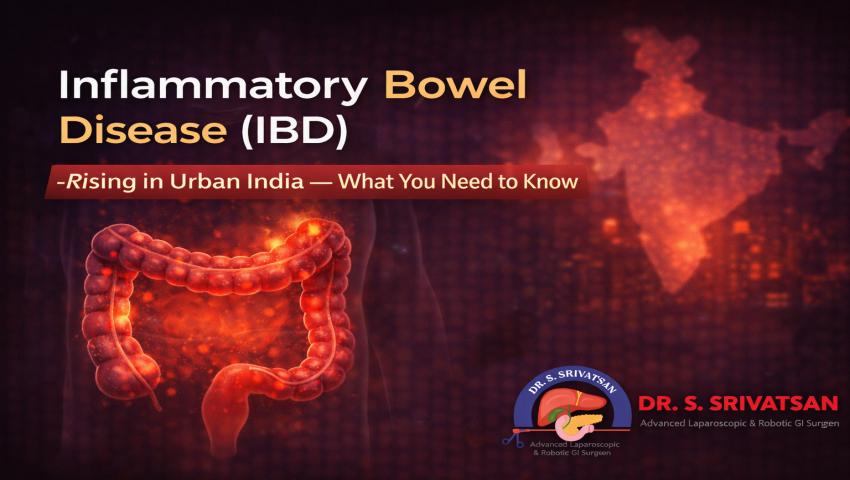
Inflammatory Bowel Disease (IBD) Rising in Urban India — What You Need to Know?
Digestive health problems are increasing rapidly in Indian cities. One condition that doctors are seeing more often today is Inflammatory Bowel Disease (IBD). Earlier, IBD was considered rare in India. But with changing lifestyles, stress, and food habits, the number of urban patients diagnosed with IBD is rising every year. IBD can affect young adults, working professionals, and even teenagers. Many people ignore early symptoms or confuse them with acidity or irritable bowel syndrome (IBS). This delay can lead to serious complications. Consulting an experienced Gastroenterologist in Chennai at an early stage can help in accurate diagnosis and timely treatment. Understanding the disease early allows patients to manage symptoms better and avoid long-term damage.
This blog explains what IBD is, why it is increasing in urban India, how it is diagnosed, available treatment options, and when surgery may be required.
Inflammatory Bowel Disease – Definition:
Inflammatory bowel disease is a chronic condition where the digestive tract becomes inflamed for a long time. The inflammation keeps coming back in cycles called flare-ups and remission.
There are two main types of IBD:
- Ulcerative Colitis – Affects the large intestine (colon and rectum).
- Crohn’s Disease – Can affect any part of the digestive tract, from mouth to anus.
Unlike common infections, IBD is not caused by bacteria or viruses. It is an immune-related condition where the body attacks its own intestinal lining.
Why Is IBD Rising in Urban India?
Doctors in major Indian cities are diagnosing inflammatory bowel disease more frequently than before. Earlier, IBD was considered uncommon in India. Today, it is being seen in young adults, office-going professionals, and even students. Several urban lifestyle factors are responsible for this rise.
- Urban Lifestyle and Stress: City life is fast and stressful. Long working hours, tight deadlines, irregular meals, and lack of proper sleep put continuous pressure on the body. Mental stress directly affects gut health. Stress can disturb the immune system and increase inflammation in the intestines. Over time, this can trigger or worsen IBD symptoms.
- Processed and Fast Foods: Urban diets have changed significantly. Many people depend on packaged foods, fast food, bakery items, and sugary drinks. These foods contain preservatives, refined flour, unhealthy fats, and artificial additives. Such ingredients damage the natural balance of good bacteria in the gut. An unhealthy gut environment increases the risk of intestinal inflammation and IBD.
- Reduced Physical Activity: Modern city life involves long hours of sitting. Many people travel by car, work at desks, and exercise very little. Lack of physical activity slows digestion and affects bowel movements. It also weakens the immune system. Poor immunity makes the gut more prone to chronic inflammation seen in IBD.
- Better Awareness and Diagnosis: Earlier, many patients with IBD were wrongly diagnosed as having acidity, infection, or irritable bowel syndrome. Today, there is better awareness among doctors and patients. Advanced tests like colonoscopy, scans, and blood markers help in accurate diagnosis. This has led to more cases being correctly identified, especially in urban areas with access to specialist care.
Common Symptoms of Inflammatory Bowel Disease:
IBD symptoms vary from person to person. Some people have mild symptoms, while others suffer from severe flare-ups.
Common signs include:
- Chronic diarrhoea
- Blood or mucus in stools
- Abdominal pain and cramps
- Weight loss
- Fatigue
- Anaemia
- Urgency to pass stools
If these symptoms last for weeks, medical evaluation is necessary.
Diagnosis of Inflammatory Bowel Disease:
Early and accurate diagnosis of inflammatory bowel disease is essential to prevent complications.
A surgical gastroenterologist may recommend:
- Blood tests to check inflammation and anaemia
- Stool tests to rule out infections
- Colonoscopy to examine the colon lining
- Biopsy to confirm diagnosis
- CT or MRI scans to assess disease extent
An experienced Surgical Gastroenterologist in Chennai plays a key role in interpreting these results and planning personalised treatment.
Inflammatory Bowel Disease Medicine and Treatment Options:
IBD treatment focuses on controlling inflammation and preventing flare-ups. The treatment plan depends on disease severity and response
Commonly used medications include:
- Anti-inflammatory drugs
- Immunosuppressants
- Biologic therapies
- Steroids for short-term control
Inflammatory bowel disease medicine helps many patients achieve long-term remission when taken under medical supervision.Lifestyle changes such as stress management, diet modification, and regular follow-ups also improve outcomes.
Can Inflammatory Bowel Disease Be Cured?
Many patients ask, can inflammatory bowel disease be cured?
At present, IBD is a chronic condition and does not have a permanent cure. However, with modern treatment, most patients can lead a normal and active life.
The goal of treatment is:
- Long-term remission
- Minimal symptoms
- Prevention of complications
- Improved quality of life
In some cases, surgery may offer long-lasting relief, especially when medical treatment fails.
When Is Surgery Needed for IBD?
Surgery is not required for all IBD patients. But it becomes necessary when:
- Medicines stop working
- Severe bleeding occurs
- Bowel obstruction develops
- Cancer risk increases
- Quality of life is severely affected
Advanced surgical techniques have made IBD surgery safer and more effective.
Role of Advanced Surgery in IBD Management:
Modern surgical care focuses on precision, minimal pain, and faster recovery.
Laparoscopic and Robotic Surgery
- Smaller incisions
- Less blood loss
- Faster healing
- Shorter hospital stay
An experienced Laparoscopic Surgeon in Chennai or Robotic Surgeon in Chennai can perform complex bowel surgeries with high accuracy.For patients with long-standing ulcerative colitis or complicated Crohn’s disease, consulting a skilled Colorectal Surgeon in Chennai is crucial.
Expert Care by Dr. S. Srivatsan Gurumurthy:
Dr. Srivatsan Gurumurthy is a highly respected Robotic and Laparoscopic Surgeon in Chennai with over 17+ years of experience. He specialises in advanced gastrointestinal, colorectal, liver, pancreas, and hernia surgeries. Practising at GEM Hospital, Chennai, Dr. Srivatsan Gurumurthy is trained in the Da Vinci robotic system and is known for managing complex GI conditions with precision and personalised care. As a leading Surgical Gastroenterologist in Chennai, he combines evidence-based medicine with minimally invasive surgical techniques to achieve the best outcomes for IBD patients.
His expertise as a Colorectal Surgeon in Chennai and Laparoscopic Surgeon in Chennai ensures comprehensive care for patients who require advanced intervention.
Conclusion:
The rise of inflammatory bowel disease in urban India is a growing health concern. Early awareness, correct diagnosis, and expert care are key to managing this condition successfully. With advancements in medical therapy and minimally invasive surgery, patients no longer need to suffer in silence. Trusted specialists like Dr. S. Srivatsan Gurumurthy, a renowned Robotic Surgeon in Chennai and Surgical Gastroenterologist in Chennai, offer comprehensive and compassionate care for IBD.
For expert evaluation and personalised treatment, Booking Appointment at GEM Hospital, Chennai, or SS Surgical Clinic, Mylapore.