- 14/07/2025
- Dr. Srivatsan Gurumurthy
- 0 Comments
- Blog
What Is Biliary Stricture and How it is treated?
The biliary system plays an important role in our digestion. It helps carry bile from the liver to the small intestine, which assists in breaking down fats. However, sometimes this bile duct can become narrow or blocked—a condition known as a biliary stricture. If not treated on time, a biliary stricture can lead to serious health problems such as jaundice, infections, or liver damage. Thankfully, with modern medical advancements, biliary stricture treatment in Chennai is now more precise and effective, especially when performed using robotic and laparoscopic techniques. Let’s explore what biliary strictures are, why they occur, and how they are treated, particularly under the expert care of Dr. S. Srivatsan Gurumurthy, a highly trusted Robotic and Laparoscopic Liver and Pancreas Surgeon in Chennai.
What Is Biliary Stricture?
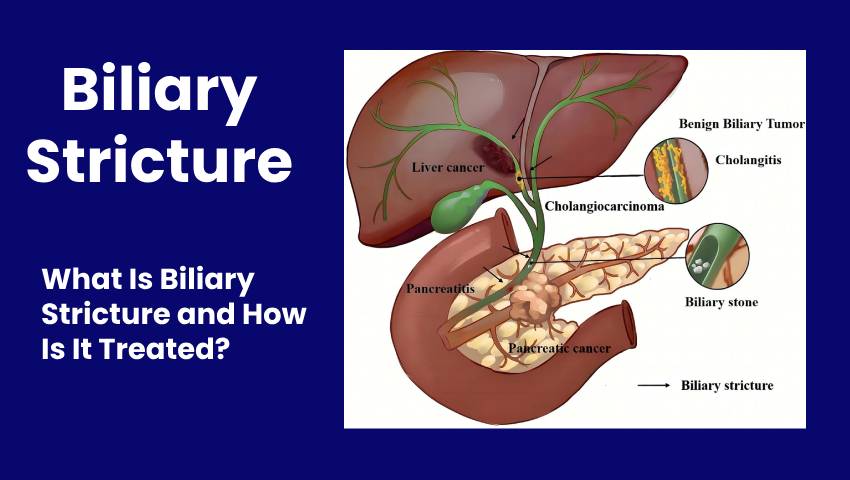
A biliary stricture is a narrowing of the bile duct, which carries bile from the liver and gallbladder to the small intestine. When the duct becomes too narrow, the flow of bile is blocked. This can lead to infections, liver damage, or jaundice. Biliary strictures can be either benign (non-cancerous) or malignant (cancerous). Benign strictures are more common and are usually caused by injury, surgery, or inflammation.
Causes of Biliary Stricture:
Several factors can lead to a biliary stricture. Some of the most common causes include:
- Surgical Injury: Injury to the bile duct during gallbladder removal surgery (cholecystectomy) is one of the most common causes of strictures. Even experienced surgeons can accidentally damage the bile duct due to its delicate nature.
- Chronic Inflammation: Conditions like primary sclerosing cholangitis, chronic pancreatitis, or bile duct stones can cause long-term inflammation, leading to scarring and narrowing of the duct.
- Cancer: Cancers of the pancreas, bile duct (cholangiocarcinoma), or gallbladder can press on the bile duct or grow inside it, causing malignant strictures.
- Infections: Certain parasitic or bacterial infections may also lead to scarring of the bile duct over time.
Symptoms of Biliary Stricture:
In the early stages, biliary strictures may not show any symptoms. But as the narrowing worsens, it can cause:
- Jaundice (yellowing of skin and eyes)
- Dark urine and pale stools
- Itching
- Pain in the upper right side of the abdomen
- Fever and chills (due to infection or cholangitis)
- Nausea or vomiting
- Loss of appetite or weight loss
If you or a loved one is facing these signs, it’s important to consult a specialist immediately. Dr. S. Srivatsan Gurumurthy is highly experienced in diagnosing and treating bile duct disorders in Chennai.
How Is Biliary Stricture Diagnosed?
To confirm the presence of a biliary stricture and find out its cause, doctors may recommend:
Blood Tests:
- Liver function tests help check for signs of blockage or liver inflammation.
Imaging Tests:
- Ultrasound or CT scan shows the size and location of the stricture.
- MRCP (Magnetic Resonance Cholangiopancreatography) gives a detailed image of the bile ducts without using a camera.
- ERCP (Endoscopic Retrograde Cholangiopancreatography) combines X-rays and endoscopy. It is not only used for diagnosis but also for treatment in some cases.
Liver Biopsy:
- If cancer is suspected, a tissue sample may be taken to check for malignancy.
Treatment Options for Biliary Stricture
The treatment depends on the cause, location, and severity of the stricture. In Chennai, Dr. S. Srivatsan Gurumurthy offers both traditional and advanced robotic and laparoscopic options for managing biliary strictures with precision and care.
1. Endoscopic Treatment (ERCP):
In many cases, the stricture can be managed using ERCP. This includes:
- Balloon Dilatation: A small balloon is inserted into the duct and inflated to widen the stricture.
- Stent Placement: A small tube is inserted to keep the duct open and allow bile to flow normally.
These are usually done as day-care procedures and are ideal for non-cancerous strictures.
2. Percutaneous Drainage:
In some patients, a needle is inserted through the skin into the liver to drain the bile when endoscopic options are not possible. This is called PTBD (Percutaneous Transhepatic Biliary Drainage).
3. Surgery:
Surgical treatment is usually considered for:
- Long or complex strictures
- Strictures due to previous surgery
- Suspicion or presence of cancer
Dr. Srivatsan Gurumurthy is a specialist in robotic and laparoscopic bile duct surgery. Minimally invasive surgery offers faster recovery, less pain, and smaller scars compared to open surgery.
4. Robotic Surgery for Biliary Stricture:
Robotic surgery is an advanced technique where a robotic system is used by the surgeon for better control and accuracy. Benefits of robotic bile duct surgery include:
- High precision and minimal tissue damage
- Faster healing and discharge
- Less blood loss
- Shorter hospital stay
- Better cosmetic results
At GEM Hospital, Chennai, Dr. Srivatsan performs robotic bile duct reconstruction and resection surgeries using the Da Vinci Surgical System, which is ideal for complex hepatobiliary procedures.
Can Biliary Stricture Be Prevented?
While not all strictures can be prevented, some steps may reduce the risk:
- Choosing an experienced surgeon for gallbladder or liver-related surgeries
- Timely treatment of infections or pancreatitis
- Regular follow-ups after bile duct or liver surgery
Why Choose Dr. Srivatsan Gurumurthy for Biliary Stricture Treatment in Chennai?
With over 17 years of experience in hepatobiliary, pancreatic, and gastrointestinal surgery, Dr. S. Srivatsan Gurumurthy is among the most trusted names for biliary stricture treatment in Chennai. He is:
- Trained in robotic and laparoscopic surgery
- An expert in minimally invasive hepatobiliary surgeries
- Associated with GEM Hospital, one of Chennai’s top gastro-surgical centres
- Known for his patient-friendly approach and surgical precision
Conclusion:
Biliary stricture is a serious but treatable condition. Timely diagnosis and treatment by an experienced surgeon can prevent complications and improve quality of life. Whether it’s a simple benign stricture or a complex cancer-related one, Dr. Srivatsan Gurumurthy offers personalised, minimally invasive care using the latest robotic surgical techniques. If you’re experiencing symptoms or have been diagnosed with a bile duct problem, don’t wait. Book your consultation with Dr. Srivatsan Gurumurthy at GEM Hospital, Chennai, today.
Frequently Asked Questions (FAQs):
A biliary stricture is the abnormal narrowing of the bile duct, which blocks the flow of bile from the liver to the intestine. This condition can cause jaundice, pain, and digestive issues.
Yes, many benign biliary strictures can be treated non-surgically using endoscopic methods like ERCP with balloon dilation or stent placement.
Yes, robotic surgery is highly safe when performed by an experienced surgeon. It results in minimal complications, less pain, and faster healing compared to traditional open surgery.
Dr. S. Srivatsan Gurumurthy is a highly experienced robotic and laparoscopic hepatobiliary surgeon in Chennai, known for treating bile duct strictures with advanced techniques at GEM Hospital.