- 05/09/2026
- Dr. Srivatsan Gurumurthy
- 0 Comments
- Blog
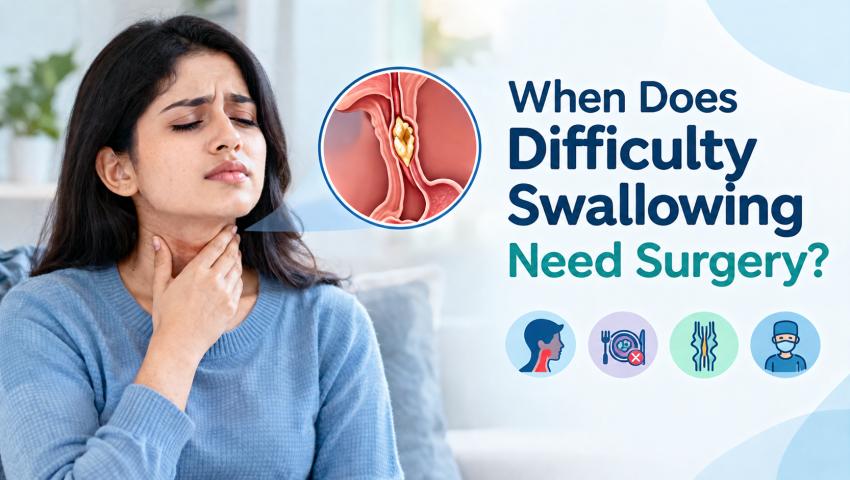
When Does Difficulty Swallowing Need Surgery?
Have you ever felt like food is stuck in your throat, or that swallowing suddenly takes more effort than it used to? Difficulty swallowing, medically known as dysphagia, is more common than most people realise — and it’s often brushed off as “just a phase” until it starts affecting daily life. If home remedies aren’t helping, it may be time to consult a Robotic Surgeon in Chennai like Dr Srivatsan Gurumurthy for a proper evaluation.
The good news? Not every case of difficulty swallowing food needs surgery. Many people find relief through medication, dietary changes, or swallowing therapy. But in some cases, dysphagia surgery becomes the only real solution — especially when a structural blockage, muscle dysfunction, or underlying condition is involved.
What Causes Difficulty Swallowing (Dysphagia)?
Dysphagia means your body struggles to move food or liquid smoothly from mouth to stomach. It’s a symptom, not a disease, pointing to something else going on.
It falls into two types:
- Oropharyngeal Dysphagia (Mouth & Throat Level) — caused by muscle or nerve issues, such as stroke, nerve damage, muscular disorders, or age-related weakness.
- Oesophageal Dysphagia (Food Pipe Level) — occurs when food gets stuck lower down, due to GERD, oesophageal strictures, achalasia, tumours, or a Zenker’s diverticulum.
Difficulty swallowing solids more than liquids usually points to a structural issue that needs a specialist’s evaluation rather than home remedies.
Symptoms That Signal a Serious Problem:
Occasional swallowing trouble, like eating too fast, usually isn’t a red flag. But watch for these signs:
- Pain while swallowing (odynophagia) that doesn’t go away
- Feeling food stuck in throat despite multiple swallows
- Unexplained weight loss
- Frequent coughing or choking while eating
- Regurgitation of food
- Recurrent chest infections (a sign food may be entering the lungs)
- Hoarseness or voice changes
- Difficulty swallowing that keeps worsening over weeks
Is difficulty swallowing a sign of cancer? In rarer cases, yes, especially with weight loss and progressive worsening. Persistent symptoms should never be self-diagnosed or ignored.
Non-Surgical Treatments Tried Before Surgery:
Surgery is rarely the first step. Most doctors, including specialists at SS Surgical Clinic, start with conservative options and only recommend surgery when these don’t work:
1. Medications:
- Proton pump inhibitors (PPIs) for acid reflux-related dysphagia
- Muscle relaxants for certain motility disorders
2. Swallowing Therapy:
Speech and swallowing therapists teach exercises that strengthen the muscles involved in swallowing — often very effective for oropharyngeal dysphagia.
3. Dietary Modifications:
Softer foods, smaller bites, and eating slowly can significantly reduce throat-clearing episodes for people with mild to moderate symptoms.
4. Non-Surgical Dilation:
For minor oesophageal narrowing, doctors may use a balloon or dilator to gently stretch the oesophagus without full surgery.
If these approaches don’t bring lasting relief, or if there’s a structural cause that medication simply cannot fix, that’s when the conversation shifts toward surgical options.
Medical Conditions That May Require Surgery:
Oesophageal Strictures:
Severe or recurrent narrowing of the oesophagus, often due to long-standing acid reflux, may require surgical widening when dilation alone doesn't provide sufficient relief.
Achalasia:
Since the oesophageal muscles fail to relax and push food down, surgery (such as a Heller myotomy) is often the most effective long-term treatment.
Zenker's Diverticulum:
A pouch that forms in the throat and traps food needs to be surgically removed once it starts causing choking, bad breath, or regurgitation.
Oesophageal or Throat Tumours:
Whether benign or cancerous, growths that block the food pipe usually require surgical removal.
Severe GERD with Structural Damage:
When acid reflux has caused significant scarring or a hiatal hernia, surgery like fundoplication may be recommended.
Doctors also use grading of dysphagia — assessing severity based on what a patient can and cannot swallow (liquids, soft foods, solids) — to decide how urgently surgical intervention is needed.
When Surgery Becomes Necessary?
So, when does difficulty swallowing need surgery? Broadly, doctors consider surgery when:
- Non-surgical treatments have been tried and haven’t worked
- There’s a physical blockage (tumour, stricture, or diverticulum) that medication cannot resolve
- The swallowing muscles have failed to the point where food cannot pass safely
- There’s a risk of aspiration (food or liquid entering the lungs), which can lead to serious infections
- Nutrition and weight are being significantly affected
- A cancer diagnosis is confirmed and requires surgical removal
As a Surgical Gastroenterologist in Chennai, Dr Srivatsan Gurumurthy often explains to patients that surgery isn’t about jumping straight to the most invasive option — it’s about recognising when the body genuinely needs mechanical correction that no medicine or therapy can provide.
Types of Surgery for Swallowing Problems:
1. Oesophageal Dilation (Surgical)
A more advanced stretching procedure for stubborn strictures that don't respond to standard dilation.
2. Heller Myotomy
A muscle-cutting procedure used for achalasia, helping food pass more easily into the stomach.
3. Fundoplication
Often performed for severe GERD, this procedure wraps part of the stomach around the lower oesophagus to prevent acid reflux.
4. Diverticulectomy
Surgical removal of a Zenker's diverticulum pouch.
5. Tumour Resection
Removal of cancerous or benign growths blocking the oesophagus or throat.
Many of these procedures can now be performed using minimally invasive or robotic-assisted techniques, which typically mean smaller incisions, less pain, and faster recovery. As a practicing Robotic Surgeon in Chennai, Dr. Srivatsan Gurumurthy uses these advanced techniques where appropriate to reduce recovery time for patients.
Recovery After Swallowing Surgery:
Recovery depends on the type of procedure performed, but here’s a general idea of what to expect:
- Hospital stay: Ranges from 1 day (minimally invasive procedures) to a week (more complex surgeries)
- Diet progression: Most patients start on liquids, move to soft foods, and gradually return to a normal diet over several weeks
- Follow-up care: Regular check-ups to monitor healing and swallowing function
- Swallowing therapy: Sometimes recommended post-surgery to help retrain muscles
Most patients notice significant improvement in their ability to swallow comfortably within a few weeks, though full recovery timelines vary based on the individual condition and overall health.
When to See a Doctor?
Don’t wait for symptoms to become severe. It’s time to consult a specialist if you experience:
- Difficulty swallowing that lasts more than a couple of weeks
- Pain every time you swallow
- Unexplained weight loss
- Choking or coughing frequently during meals
- A feeling that food is stuck, even with liquids
- Voice changes alongside swallowing issues
Early diagnosis makes a real difference — many conditions causing dysphagia are far easier to treat when caught early, before they progress to a stage where surgery becomes the only option.
Conclusion:
Difficulty swallowing is a symptom that deserves attention, not dismissal. While most cases can be managed with medication, therapy, or lifestyle changes, some situations, like structural blockages, achalasia, or tumours, genuinely need surgical correction to restore normal swallowing and protect your long-term health.
If you’ve been struggling with persistent swallowing issues, don’t wait for it to get worse. Consult Dr Srivatsan Gurumurthy, an experienced Surgical Gastroenterologist in Chennai and Robotic Surgeon in Chennai at SS Surgical Clinic, for a proper evaluation and the right treatment plan for your condition.
👉 Book a Consultation with Dr Srivatsan Gurumurthy today and take the first step toward safe, comfortable swallowing.
Frequently Asked Questions:
In many cases, yes. If the cause is mild, like acid reflux or muscle weakness, medication, dietary changes, or swallowing therapy can fully resolve the issue. However, if there’s a structural blockage or a condition like achalasia, surgery may be needed for a lasting cure.
Yes, for conditions like achalasia, oesophageal strictures, or Zenker’s diverticulum, surgery often provides long-term or permanent relief once non-surgical treatments haven’t worked.
Sometimes, especially if it’s caused by a temporary infection or minor irritation. But if it persists for more than two weeks or keeps getting worse, it’s unlikely to resolve on its own and needs medical evaluation.
Common signs include pain while swallowing, a feeling of food stuck in the throat, coughing or choking during meals, unexplained weight loss, and frequent regurgitation of food.
You should see a doctor if symptoms last more than two weeks, worsen over time, come with weight loss, or cause choking, coughing, or chest discomfort during meals.