- 17/08/2026
- Dr. Srivatsan Gurumurthy
- 0 Comments
- Blog
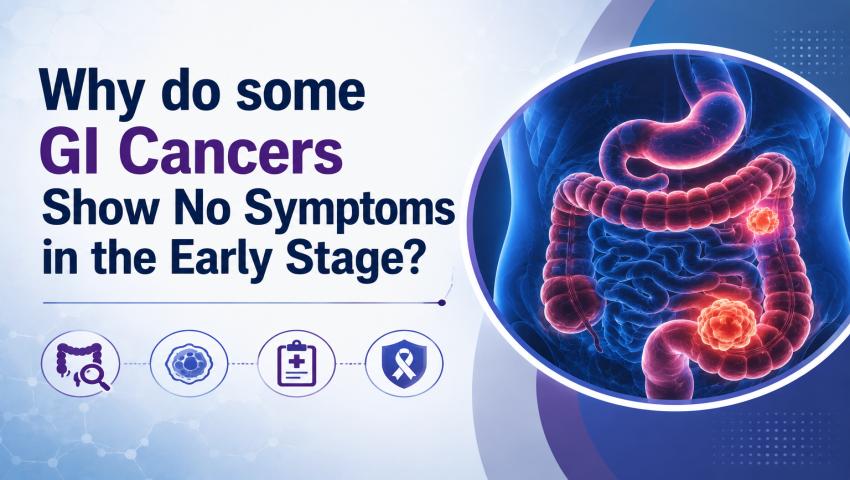
Why do some GI Cancers Show No Symptoms in the Early Stage?
Most of us believe that cancer always comes with warning bells — pain, discomfort, or some visible sign that something is wrong. But that’s not always true, especially when it comes to GI cancer symptoms — as Dr Srivatsan Gurumurthy, a Robotic and Laparoscopic Surgeon in Chennai, often explains to his patients. Many gastrointestinal cancers — including pancreatic, stomach, colorectal, and liver cancer — can grow quietly for months or years without giving away any obvious clues, often progressing to an advanced stage before symptoms finally show up.
According to Dr Srivatsan Gurumurthy, a GI Cancer Surgeon in Chennai with over 17 years of experience, many patients at SS Surgical Clinic present only after the disease has advanced, simply because the early stage of GI cancer went unnoticed. In this blog, we’ll break down why this happens, which GI cancers are most commonly silent, and why timely screening can make all the difference.
What Does "Early Stage" Cancer Mean?
Before understanding why symptoms go unnoticed, it helps to know what “early stage” actually means. Doctors usually describe cancer using stages — from Stage 0 (very localised, abnormal cells that haven’t spread) to Stage IV (cancer that has spread to other organs).
In the earliest stages, a tumour is usually small, confined to its original location, and hasn’t affected nearby tissues or organs. This is exactly the stage doctors want to catch GI cancer at, because treatment outcomes are significantly better. Unfortunately, GI cancer symptoms in the early stage are the most subtle— or completely absent.
Why Do GI Cancer Symptoms Stay Hidden in the Early Stages?
There isn’t one single reason for this. It’s usually a combination of biology, anatomy, and how the human body responds to slow, gradual changes. Here’s a closer look at each factor:
1. Small tumours don't press on anything yet:
- In the very early stage, a tumour may only be a few millimetres in size.
- At this size, it doesn’t have the bulk to push against nerves, blood vessels, or neighbouring organs.
- Most GI discomfort — pain, cramping, or a feeling of blockage — happens only when something physically presses on these sensitive structures.
A small tumour tends to sit quietly without causing any of that. It’s only once it grows larger, or starts narrowing a passage like the intestine or oesophagus, that the body finally reacts.
2. Non-specific symptoms are easy to dismiss:
- A bit of bloating after meals, feeling tired by afternoon, or eating a little less than usual are things almost everyone experiences from time to time.
- These symptoms overlap heavily with everyday issues like acidity, gas, or simply “getting older.”
- Most people don’t connect mild, occasional discomfort to anything serious.
It’s only when these symptoms become persistent, worsen over weeks, or appear alongside other changes that people usually pay closer attention — and by then, time has already passed.
3. The digestive system is forgiving:
- The GI tract is built to handle a lot of variation — different foods, irregular eating patterns, occasional infections.
- It’s remarkably good at adapting, which works against early detection.
- The system can often “work around” a small tumour without any noticeable drop in function.
Digestion continues, appetite stays mostly normal, and bowel habits don’t change dramatically, simply because the rest of the digestive system compensates for the small area that isn’t functioning as it should.
4. Gradual onset means gradual adjustment:
- GI cancers usually grow slowly rather than appearing suddenly.
- The body — and the person — has time to adjust to small changes without noticing them as “symptoms.”
- A slight dip in energy or a small change in appetite over several months can feel like a normal part of daily life.
This happens simply because there’s no sudden before-and-after moment to compare it to, so the change slips by unnoticed.
This is precisely why silent symptoms of cancer are such a challenge for both patients and doctors — there’s often nothing “obvious” to act on until later. It’s not that the body isn’t sending any signals at all; it’s that these signals are too mild, too common, or too easily explained by something else, which is exactly why regular screening for GI cancer symptoms matters more than waiting to ‘feel’ that something is wrong.
Anatomical and Biological Reasons Behind the Silence:
A few deeper biological factors explain why early-stage GI cancer symptoms are so hard to catch:
- Deep-seated organs with room to grow: Organs like the pancreas and liver sit deep inside the abdomen, surrounded by other structures. A small tumour here has plenty of “space” before it presses against nerves or nearby organs, which is usually what triggers pain, a key reason pancreatic cancer symptoms in the early stage often go unnoticed.
- Organ compensation: The liver, in particular, has an incredible ability to keep functioning even when part of it is damaged. This is one of the main reasons liver cancer symptoms often don’t appear until the disease is fairly advanced — the healthy part of the liver simply compensates for the affected area.
- Low nerve density in certain areas: Some parts of the GI tract have fewer pain receptors compared to, say, your skin. This means a growing tumour may not cause any pain at all in its early stages.
- Slow, gradual growth: Many GI cancers grow slowly enough that the body adjusts gradually, so noticeable symptoms only appear once the tumour has grown significantly or started affecting nearby structures.
- Internal, invisible bleeding: Sometimes a tumour causes very slow internal bleeding that isn’t visible to the naked eye. It may only show up as mild anaemia in a routine blood test — not as an obvious symptom the patient would notice on their own.
Types of GI Cancers That Are Commonly Silent in Early Stages:
Here’s a look at which GI cancer symptoms are most commonly missed in the early stage:
- Pancreatic cancer: This is often called one of the most silent GI cancers because the pancreas is tucked deep behind other organs. Symptoms like back pain, jaundice, or weight loss usually appear only once the tumour has grown large enough to press on nearby structures.
- Stomach cancer: Early stomach cancer symptoms — mild discomfort, bloating, or loss of appetite — closely mimic gastritis or acidity, so people often self-medicate instead of getting checked.
- Colorectal cancer: Colon cancer symptoms often develop from small polyps that grow silently over several years before turning cancerous. This slow timeline is actually good news, though, because it gives a wide window for screening to catch things early.
- Liver cancer: As mentioned earlier, liver cancer symptoms tend to appear late because the liver can function well even with partial damage. Fatigue, mild abdominal discomfort, or unintentional weight loss are often the only early hints, and they’re easy to overlook.
- Oesophageal cancer: Because the oesophagus is a relatively flexible tube, early tumours don’t usually interfere with swallowing. Noticeable difficulty swallowing tends to appear only once the tumour has grown considerably.
Why Delayed Diagnosis Is Dangerous?
When GI cancer symptoms are missed in the early stage, diagnosis often happens later — sometimes at Stage III or IV. This matters for a few important reasons:
- Treatment becomes more complex, often requiring a combination of surgery, chemotherapy, and radiation instead of surgery alone.
- Survival rates drop significantly as the stage at diagnosis advances.
- Recovery time and quality of life post-treatment can be more challenging.
This is why doctors, including Dr Srivatsan Gurumurthy, a well-known Robotic and Laparoscopic Surgeon in Chennai, consistently emphasise that regular screening — not waiting for symptoms — is the smartest way to catch GI cancer early, when it’s most treatable.
Importance of Regular Screening and Early Detection:
Since early-stage GI cancers rarely announce themselves, screening becomes your best defence. A few key points to keep in mind:
- Colonoscopy is recommended for colorectal cancer symptoms (colon cancer symptoms) screening, especially for those above 45 years or with a family history.
- Endoscopy for cancer detection helps identify stomach and oesophageal cancer symptoms long before they appear.
- Tumour marker blood tests can sometimes flag early warning signs, though they are usually used alongside imaging rather than as a standalone diagnostic tool.
- Routine liver function tests and imaging can help catch liver cancer symptoms before they become severe.
If you fall into a higher-risk category — due to family history, age, smoking, alcohol use, or chronic digestive issues — consult an experienced Robotic Surgeon in Chennai, like Dr Srivatsan Gurumurthy at SS Surgical Clinic, to understand your GI cancer risk and screening options better.
Conclusion: Don't Wait for Symptoms to Appear
GI cancers can be sneaky — growing quietly without pain or obvious discomfort, which is exactly what makes early detection so important. Instead of waiting for GI cancer symptoms in the early stages to show up, it’s far wiser to stay proactive with regular screenings, especially if you’re above 45 or have risk factors like family history.
If you’ve noticed unexplained weight loss, persistent fatigue, or digestive discomfort that won’t go away, don’t ignore it. Book an appointment with Dr Srivatsan Gurumurthy at SS Surgical Clinic for timely diagnosis and expert care — early action makes all the difference.
Frequently Asked Questions
Yes. Early stomach cancer often causes no symptoms because the stomach lining has few pain receptors and can stretch around a small tumour without any noticeable change.
Quite common — especially GI cancers like pancreatic, liver, and stomach cancer, since these organs sit deep in the abdomen and can compensate for early damage.
Often for several years. Bowel cancer usually starts as small polyps that grow slowly, which is why regular colonoscopy screening can catch it early.
It varies, but many GI cancers stay silent for months to years until the tumour grows large enough to press on nearby structures — which is why screening matters more than waiting for symptoms.