- 02/07/2026
- Dr. Srivatsan Gurumurthy
- 0 Comments
- Blog
9 Signs Your Fatty Liver Disease Is Becoming Dangerous
Most people diagnosed with fatty liver disease assume they have plenty of time to reverse it. In the early stages, that is true. Simple fatty liver (steatosis) can often be turned around with diet and lifestyle modifications. However, if left unchecked, fat accumulation leads to chronic inflammation. This condition progresses to Non-Alcoholic Steatohepatitis (NASH), recently renamed MASH (Metabolic Dysfunction-Associated Steatohepatitis), and eventually to Cirrhosis, which is permanent, irreversible liver scarring.
Because the liver doesn’t have pain receptors, it won’t hurt as it scars. Instead, you have to watch out for systemic warning signs. If you have been diagnosed with a fatty liver, look out for these 9 symptoms indicating the disease is entering a dangerous phase.
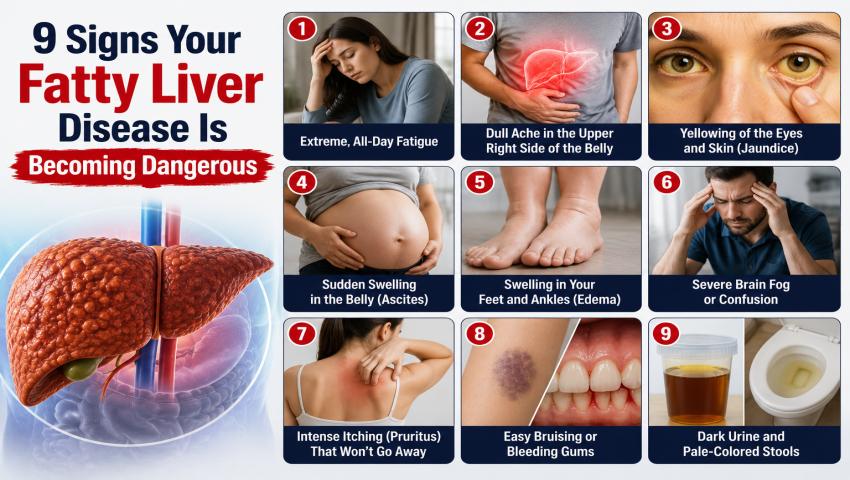
9 Warning Signs of Advanced Fatty Liver Disease:
1. Extreme, All-Day Fatigue:
This isn’t your usual tiredness after a long day at the office. Liver-related fatigue is a deep, heavy exhaustion that doesn’t go away even after a solid 8 hours of sleep. When the liver is struggling, it fails to clear toxins and process energy efficiently, leaving you feeling completely drained.
2. Dull Ache in the Upper Right Side of the Belly:
The liver is located just below your ribs on the right side. While the liver tissue itself doesn’t feel pain, severe inflammation causes the organ to swell. This stretching of the liver’s outer cover causes a constant, heavy, dull ache or pressure in the upper right abdomen.
3. Yellowing of the Eyes and Skin (Jaundice):
This is a major red flag. When liver cells are badly damaged, they can no longer filter bilirubin (a yellowish pigment formed during the natural breakdown of red blood cells). As it builds up in your body, the whites of your eyes and your skin take on a distinct yellow tint.
4. Sudden Swelling in the Belly (Ascites):
If your belly is expanding rapidly and feels tight or full—even though you haven’t gained weight anywhere else—fluid might be accumulating in your abdomen. This condition, called ascites, happens due to high pressure in the liver’s blood vessels and a drop in protein production.
5. Swelling in Your Feet and Ankles (Edema):
Similarly, to the belly swelling, advanced liver damage drops the production of a vital protein called albumin. Without enough albumin, fluid leaks out of your blood vessels into the surrounding tissues, leading to heavy, puffy, and sometimes painful swelling in your lower legs, ankles, and feet.
6. Severe Brain Fog or Confusion:
Is a family member suddenly becoming unusually forgetful, confused, or struggling to concentrate? When the liver is heavily scarred, it fails to filter out toxins like ammonia from the blood. These toxins travel directly to the brain, causing a condition known as hepatic encephalopathy.
7. Intense Itching (Pruritus) That Won't Go Away:
This is not an ordinary skin allergy or dry skin problem. Advanced liver malfunction causes bile salts to deposit under your skin, leading to a severe, maddening itch that scratch creams cannot fix. It is usually most intense on the palms of your hands and the soles of your feet.
8. Easy Bruising or Bleeding Gums:
The liver is responsible for manufacturing the proteins that help your blood clot. If you notice large bruises from tiny bumps, or if your gums bleed excessively when you brush your teeth, it means your liver is struggling to make these essential clotting factors.
9. Dark Urine and Pale-Colored Stools:
Pay close attention to your bowel movements. If your urine consistently looks dark brown (like strong tea) despite drinking plenty of water, or if your stools look unusually pale, clay-colored, or whitish, it indicates that the flow of bile from your liver is severely blocked.
If you catch fatty liver in the inflammatory stages, targeted medical management, structural weight loss, and lifestyle changes can completely reverse the condition.
When to Consult a Gastro Specialist, Dr Srivatsan Gurumurthy?
If you or your loved ones are showing any of these 9 warning signs, do not. Advanced fatty liver requires specialized diagnostic mapping, such as a FibroScan (a quick, painless scan that measures liver stiffness and scarring), to determine the exact level of damage. If you have been diagnosed with a fatty liver and want to prevent it from progressing into a dangerous condition, consult Dr. Srivatsan Gurumurthy, Senior Consultant Surgical Gastroenterologist. Get an expert, evidence-based assessment to safeguard your health.
Frequently Asked Questions:
Watch for extreme fatigue, upper right abdominal pain, yellowing eyes/skin, belly or ankle swelling, and dark urine — these signal advanced disease.
MASH is just the new name for NASH — same condition, updated to reflect its link to metabolic health.
Yes, if caught in the inflammatory stage. Once cirrhosis (permanent scarring) sets in, it’s irreversible.
A FibroScan — a quick, painless scan that measures liver stiffness and scarring.
Immediately, if you notice jaundice, swelling, confusion, or easy bruising — these mean urgent specialist care is needed.