- 30/10/2026
- Dr. Srivatsan Gurumurthy
- 0 Comments
- Blog
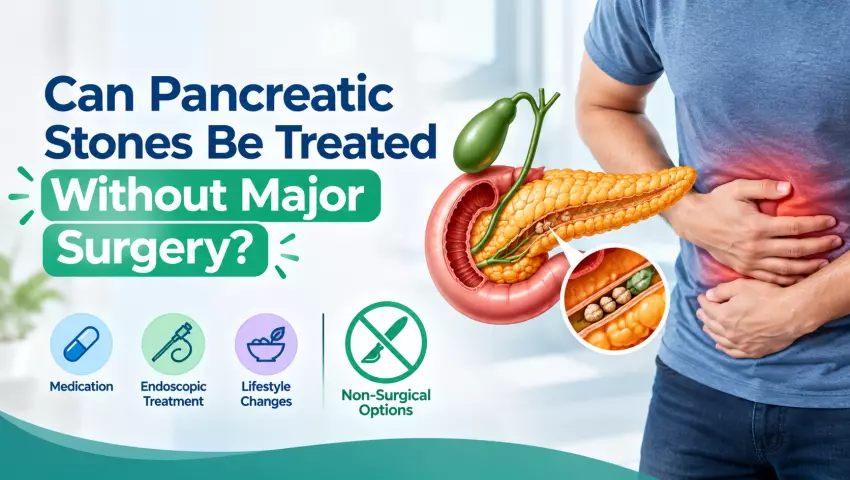
Can Pancreatic Stones Be Treated Without Major Surgery?
Have you been told you have pancreatic stones and that an operation is the only way out? Many patients feel frightened at this stage, and that is understandable. The good news is that surgery is often not the first answer. Today, many stones can be broken or removed through the mouth, without a large abdominal incision.
In this blog, Dr. Srivatsan Gurumurthy, a surgical gastroenterologist with 17 years of experience at SS Surgical Clinic, Apollo Superspeciality Hospital, explains how treatment works and when you can safely avoid major surgery.
If you are looking for a Surgical Gastroenterologist in Chennai or Pancreatic Disease Treatment in Chennai, this guide explains your options in simple language.
What Are Pancreatic Stones?
Pancreatic stones, also called pancreatic calculi, are hard calcium deposits that form inside the pancreatic duct. This duct carries digestive juices from the pancreas to the intestine. When a stone blocks it, the juices build up and cause pressure, swelling and pain.
These stones are mostly seen in people with chronic pancreatitis. Common causes include long-term alcohol use, smoking, genetic factors and tropical calcific pancreatitis, which is seen in many parts of India.
Typical pancreatic stone symptoms include repeated upper abdominal pain that spreads to the back, pain after meals, nausea, weight loss and oily, foul-smelling stools.
Do All Pancreatic Stones Need Surgery?
No, not always. Many patients ask, “Is surgery necessary for pancreatic stones?” The honest answer is that it depends on the size, number and location of the stones, any narrowing of the duct, and how severe the pain is.
Most patients are first treated with medicines and endoscopic procedures. Pancreatic stone surgery is usually kept for cases where these methods fail, or complications develop.
Another common question is whether pancreatic stones can dissolve on their own. Unfortunately, they rarely do. Once they cause blockage or pain, they usually need proper treatment.
Before deciding anything, scans such as CT, MRCP or endoscopic ultrasound are important. Long-standing pancreatitis can sometimes hide a tumour, so evaluation by a Pancreatic Cancer Surgeon in Chennai gives you clarity and peace of mind.
Non-Surgical Treatment Options for Pancreatic Stones:
The good news is that non-surgical treatment for pancreatic stones has improved a lot. Modern pancreatic duct stone treatment mainly includes four steps:
- Medicines, enzymes and diet changes
- ERCP to remove stones
- ESWL to break large stones
- Pancreatic duct stenting to keep the duct open
These are often combined. For Pancreatic Disease Treatment in Chennai, Dr. Srivatsan Gurumurthy plans the approach step by step, starting with the least invasive option that can work for you.
1. ERCP: Removing Pancreatic Stones Endoscopically
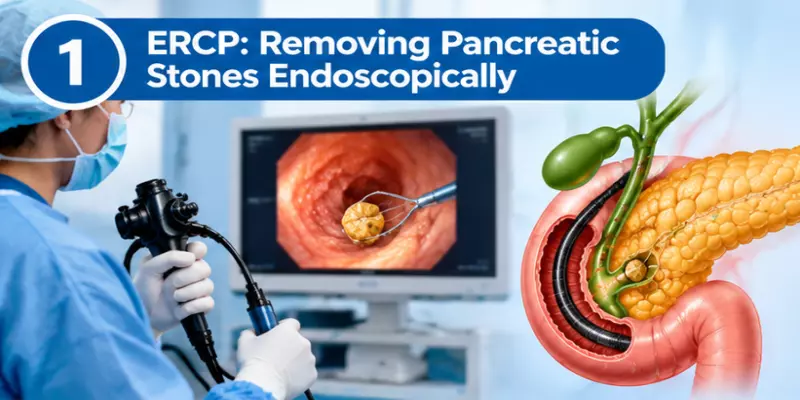
ERCP stands for Endoscopic Retrograde Cholangiopancreatography. It is the most common method for pancreatic stone removal without surgery.
In this ERCP procedure, a thin, flexible tube with a camera is passed through the mouth into the small intestine. The doctor then guides small instruments into the pancreatic duct. The duct opening is widened slightly, and the stones are pulled out using a basket or balloon.
You are given sedation, so you do not feel pain. Most patients go home within a day or two. ERCP for pancreatic stones works best for small and medium stones, and it requires the skill of an experienced surgical gastroenterologist. This is why endoscopic treatment of pancreatic stones is best done by a specialist who handles such cases regularly.
2. ESWL: Breaking Pancreatic Stones with Shock Waves
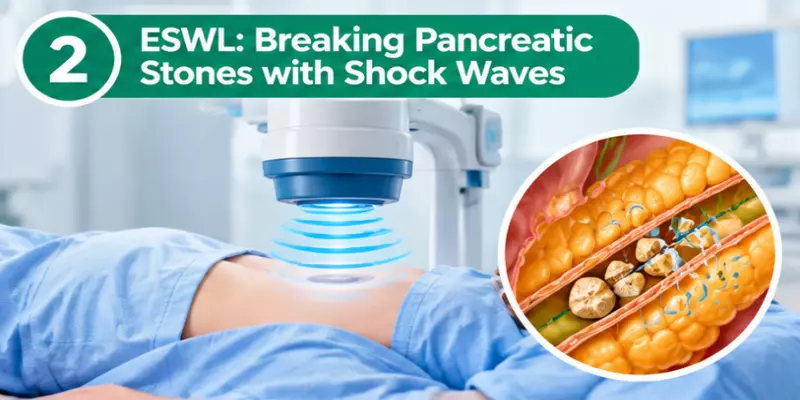
Some stones are too large or too hard to be pulled out directly. This is where ESWL (Extracorporeal Shock Wave Lithotripsy) helps.
Shock waves are directed from outside the body onto the stone. They break it into tiny fragments, much like the treatment used for kidney stones. No incision is needed.
After lithotripsy for pancreatic stones, ERCP is usually done to clear the broken pieces from the duct. ESWL for pancreatic stones is especially useful for large stones inside the main duct, which earlier patients would have needed major surgery for.
3. Pancreatic Duct Stenting:
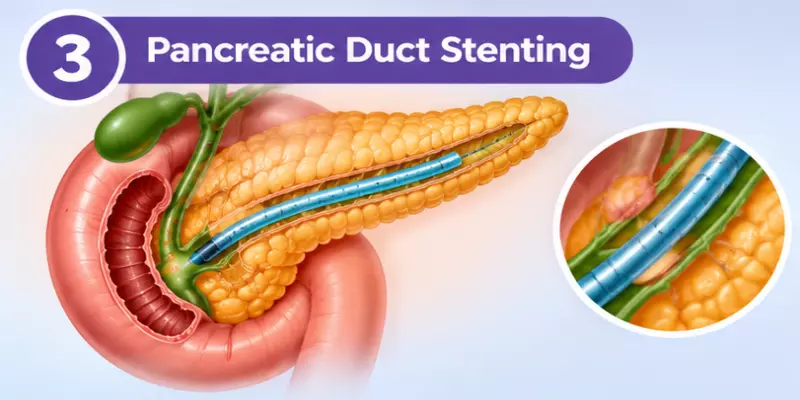
Sometimes the duct becomes narrow because of scarring from long-term inflammation. A narrow duct can cause stones to return and pain to continue.
During ERCP, a small plastic tube called a pancreatic duct stent is placed inside the duct. It keeps the passage open so that pancreatic juice flows freely. The stent is usually kept for a few months and then removed or replaced, depending on how the duct responds.
The right stent size and timing matter a lot, which is why guidance from a skilled Surgical Gastroenterologist in Chennai can make a real difference to the result.
4. Medicines, Enzymes, and Diet for Pain Relief:

Medical care is the base of every chronic pancreatitis treatment plan, whether or not a procedure is needed.
- Pain relief: Medicines are given to control pain and reduce flare-ups.
- Pancreatic enzymes: These capsules, taken with meals, help digest food and reduce loose, oily stools.
- Pancreatic stones diet: Eat small, frequent meals that are low in fat. Drink plenty of water.
- Lifestyle: Stop alcohol and smoking completely. This is one of the most important steps to prevent new stones.
Patients with weight loss or diabetes may also need nutritional support and regular follow-up.
Benefits of Minimally Invasive Treatment:
Choosing minimally invasive treatment offers many advantages:
- No large cut or minimal cuts
- Less pain after the procedure
- Shorter hospital stay
- Faster return to normal work and daily routine
- Lower risk compared with major surgery
- Better preservation of the pancreas and its function
Even when an operation becomes necessary, today it can often be done through tiny cuts. A Robotic Surgeon in Chennai can perform precise pancreatic surgery with smaller wounds and quicker recovery. Overall, pancreatic stone treatment in India has become far less invasive than it was a decade ago, although the cost depends on the procedure and hospital stay needed.
Risks and Limitations of Non-Surgical Treatment:
No treatment is completely risk-free, and it is better to know the limits in advance.
- Post-ERCP pancreatitis: A temporary flare-up of inflammation, the most common complication.
- Bleeding, infection or duct injury: These are uncommon but possible.
- Recurrence: Stones can come back, especially if alcohol or smoking continues.
- Not suitable for all: Very large, impacted, or multiple stones, and severe duct damage may not respond to endoscopy alone.
The risks are lower when the procedure is done at a well-equipped centre by an experienced team. Quality Pancreatic Disease Treatment in Chennai also includes clear counselling, so you know what to expect before and after the procedure.
When Is Surgery Still Needed?
Surgery is still the right choice in some situations:
- Endoscopic treatment has failed, or stones keep returning
- Severe duct blockage with persistent, disabling pain
- Complications such as pseudocysts
- Suspicion of cancer on scans or biopsy
Common operations include duct drainage procedures such as the Puestow procedure, or removal of the diseased part of the pancreas. If cancer is suspected, an experienced Pancreatic Cancer Surgeon in Chennai should be consulted early, as timely treatment improves outcomes. Where suitable, robotic techniques can make these operations safer and recovery smoother, and a Robotic Surgeon in Chennai can advise whether you are a good candidate.
Conclusion:
So, can pancreatic stones be treated without major surgery? In many cases, yes. Medicines, ERCP, ESWL and duct stenting can relieve pain and clear stones without a big operation. Surgery is needed only when these options are not enough.
The key is early diagnosis and the right team. If you have long-standing upper abdominal pain, do not ignore it. Consult Dr. Srivatsan Gurumurthy at SS Surgical Clinic, Apollo Superspeciality Hospital, for a clear plan. With 17 years of experience as a Pancreatic Cancer Surgeon in Chennai and a Robotic Surgeon in Chennai, he can guide you towards the safest and least invasive treatment.