- 10/06/2026
- Dr. Srivatsan Gurumurthy
- 0 Comments
- Blog
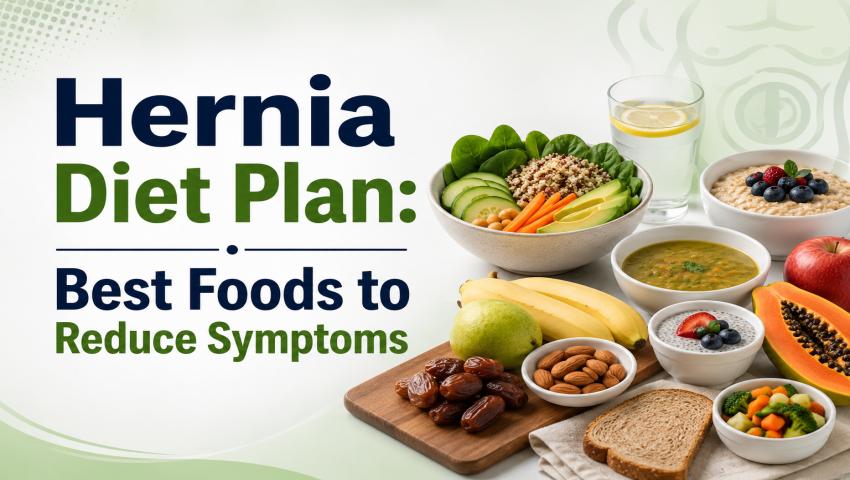
Hernia Diet Plan: Best Foods to Reduce Symptoms
Living with a hernia can be uncomfortable and painful. But did you know that what you eat plays a big role in managing your symptoms? A proper hernia diet plan can ease discomfort, reduce acid reflux, and help your recovery after surgery.
Dr. S. Srivatsan Gurumurthy, a trusted Hernia Specialist in Chennai and Senior Consultant Surgical Gastroenterologist at Apollo Super Speciality Hospital, Chennai, shares practical dietary advice to help hernia patients live better.
What Is a Hernia and Why Does Diet Matter?
A hernia occurs when an organ pushes through a weak spot in the surrounding muscle or tissue. The most common types include inguinal hernia, hiatal hernia, and umbilical hernia.
Diet matters because certain foods increase abdominal pressure and acid production. This worsens hernia symptoms like pain, bloating, and heartburn. The right food choices can reduce pressure on the hernia site and promote healing.
Best Foods to Include in a Hernia Diet Plan:
1. High-Fibre Foods:
Constipation is one of the biggest enemies of hernia patients. Straining during bowel movements puts intense pressure on the abdomen. High-fibre foods prevent constipation and ease that pressure.
Include:
- Whole grains like oats, brown rice, and ragi
- Lentils and legumes (in moderate amounts)
- Fresh fruits like papaya, pear, and banana
- Vegetables like spinach, carrots, and broccoli
Fibre-rich foods keep your digestion smooth. They reduce the need to strain, which directly lowers abdominal pressure around the hernia.
2. Lean Proteins:
Proteins support tissue repair and healing. This is especially important after hernia treatment. Choose lean protein sources that are easy to digest.
Good options include:
- Boiled chicken and fish
- Eggs
- Low-fat paneer and curd
- Tofu
Avoid fatty meats and fried protein sources. These slow digestion and trigger acid reflux — two things hernia patients must avoid.
3. Alkaline and Low-Acid Foods:
Hiatal hernia patients, in particular, suffer from acid reflux. Eating alkaline foods can neutralise stomach acid and reduce burning sensations.
Best choices:
- Cucumber
- Coconut water
- Melons
- Bananas
- Sweet potatoes
These foods are gentle on the stomach and do not trigger acid production.
4. Plenty of Water:
Hydration is essential. Drinking enough water softens stools and prevents constipation. It also supports overall digestion.
Aim for 8 to 10 glasses of water daily. Avoid drinking large amounts of water during meals, as this can cause bloating and worsen hiatal hernia symptoms.
5. Small, Frequent Meals:
Instead of three large meals, eat five to six smaller meals throughout the day. Large meals put pressure on the stomach, especially near the hernia site.
Small meals are easier to digest. They also reduce acid reflux after eating.
Foods to Avoid with a Hernia:
Knowing what NOT to eat is just as important. Some foods make hernia symptoms significantly worse.
Avoid these foods:
- Spicy foods – Increase stomach acid and cause heartburn
- Fried and oily foods – Slow down digestion and increase abdominal pressure
- Carbonated drinks – Cause bloating and gas, putting pressure on the hernia
- Citrus fruits – Oranges, lemons, and grapefruit trigger acid reflux
- Tomatoes and tomato-based sauces – Highly acidic
- Caffeine and alcohol – Relax the lower oesophageal sphincter, worsening reflux
- Refined flour products (Maida) – Cause constipation
Avoiding these foods is one of the simplest steps you can take to manage your condition before and after seeing a Hernia Specialist in Chennai.
Lifestyle Tips to Support Your Hernia Diet Plan:
Diet alone is not enough. Certain lifestyle habits go hand in hand with the right food choices.
Follow these tips:
- Do not lie down immediately after eating. Wait at least two to three hours before lying down or sleeping. This prevents acid from flowing back into the oesophagus.
- Elevate the head of your bed if you experience night-time acid reflux.
- Avoid tight clothing around the abdomen. It increases pressure on the hernia site.
- Maintain a healthy weight. Excess body weight is a major risk factor for hernia and worsens existing symptoms.
- Avoid lifting heavy objects. If you must lift, use proper technique to reduce abdominal strain.
When Diet Is Not Enough? Time to See a Specialist
Diet can manage symptoms, but it cannot cure a hernia. If your symptoms are worsening, a hernia will not heal on its own. You must consult a qualified Gastroenterologist in Chennai for proper evaluation.
Dr. S. Srivatsan Gurumurthy offers comprehensive Hernia Treatment in Chennai at Apollo Super Speciality Hospital, Teynampet. He uses the most advanced surgical techniques to ensure faster recovery and minimal complications.
As an experienced Laparoscopic Surgeon in Chennai, Dr. S. Srivatsan Gurumurthy performs minimally invasive hernia repairs that result in smaller incisions, less pain, and shorter hospital stays. Laparoscopic surgery is now the gold standard for most hernia repairs.
For complex or recurrent hernias, he also offers robotic-assisted hernia surgery. As a skilled Robotic Surgeon in Chennai, Dr. S. Srivatsan Gurumurthy uses the da Vinci Si Surgical System to perform highly precise surgical repairs. Robotic surgery offers greater accuracy, better visibility, and quicker recovery compared to traditional open surgery.
Why Choose Dr. S. Srivatsan Gurumurthy?
Dr. S. Srivatsan Gurumurthy is a leading Hernia Surgeon in Chennai with over 17 years of experience. He holds advanced qualifications including MS, DNB (GI Surgery), FMAS, and FMIAS. He has published 34 research papers in national and international journals and received the prestigious Travel Grant Award at AHPBA 2019 in Seoul, South Korea.
He consults at two locations in Chennai:
- Apollo Super Speciality Hospital, 320, Anna Salai, Teynampet, Chennai – 600035
- SS Surgical Clinic, 2nd Main Rd, CIT Colony, Mylapore, Chennai – 600004
- Contact: 96772 31111
- Email: drsrivatsan12@gmail.com
- Website: www.drsrivatsan.com
- Clinic Hours: Monday to Saturday, 8 AM – 5 PM
Final Thoughts:
Managing a hernia starts with what is on your plate. A well-planned hernia diet can significantly reduce symptoms like pain, bloating, and acid reflux. Choose high-fibre foods, lean proteins, and alkaline options. Stay well hydrated and eat smaller, more frequent meals.
But remember — diet is a supportive measure, not a cure. If your hernia is causing persistent or worsening symptoms, do not delay. Speak to a qualified specialist today.
For expert consultation and advanced hernia care in Chennai, book your appointment with Dr. S. Srivatsan Gurumurthy. Whether you need laparoscopic or robotic hernia surgery, you are in safe and experienced hands.